
Introduction
Rate My Professor is a student-powered professor ratings and course review platform designed to help students compare teaching styles before choosing classes. The public page presents a simple idea: students can read anonymous feedback, rate professors, browse supported countries, and contribute comments that may help other students make better course decisions. It is most relevant for students evaluating professors and universities, while careful readers should remember that any review platform depends on the quality, fairness, and representativeness of its user submissions.
Key Features
- Student-powered professor ratings focused on teaching style, course fit, and learning experience.
- A professor search experience that helps students discover and compare professors before enrollment.
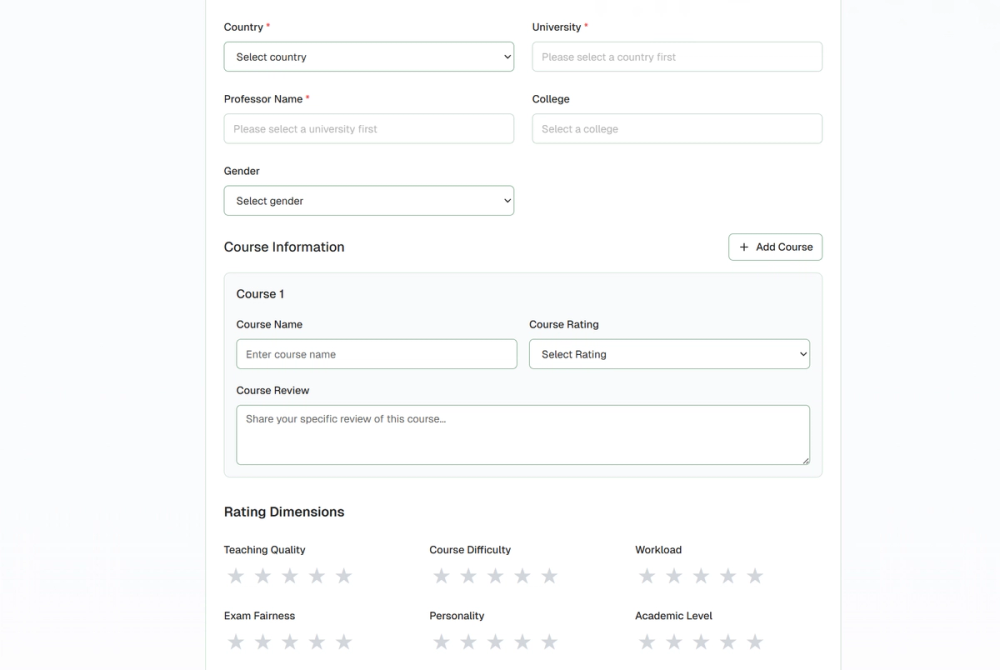
- Anonymous review submission with fields for country, university, professor name, department, professor gender, overall rating, and written comments.
- Optional detailed rating categories, including teaching quality, course difficulty, personality, respect for students, subject knowledge, research guidance, and course recommendations.
- Country browsing and supported-country information for students looking for professors and universities in their region.
- Forum and suggest-a-university navigation signals, which suggest the platform is meant to grow through student participation and regional expansion.
Use Cases
Rate My Professor is useful for students who want more context before choosing a course section or professor. The site highlights honest ratings from real students and positions those reviews as a way to understand how different professors teach, support, and engage in class. That makes the platform most useful when a student is comparing multiple course options and wants more than a catalog description.
The platform also gives students a way to contribute feedback after taking a class. Its review form asks for an overall rating, comments, and optional details such as teaching quality, course difficulty, subject knowledge, and research guidance. That structure can help future students understand not just whether a professor is liked, but what kind of classroom experience past students describe.
Universities and academic communities may also find value in aggregated student feedback, although the public page does not present an institutional dashboard or analytics product. The site says reviews can highlight teaching strengths, surface issues early, and guide more transparent, student-centered decisions, but readers should treat those statements as the platform's positioning rather than independently verified outcomes.
Pricing
The fetched public page does not show paid plans, subscription tiers, or pricing requirements for students. The visible experience appears centered on searching professors, browsing countries, visiting forums, suggesting a university, and submitting reviews without an account requirement. Students and institutions with specific access, moderation, or data-use questions should check the official Rate My Professor site for current terms before relying on it.
User Experience and Support
Rate My Professor presents a direct student-facing interface with clear actions: search professors, rate a professor, browse countries, visit forums, and suggest a university. The review form is structured enough to collect useful context while still keeping the main submission path straightforward. It also includes practical guidance telling users to avoid sharing personal information and to keep feedback respectful and constructive.
Support signals are visible through navigation and policy links rather than a traditional help center. The page includes Platform, About Us, Suggest University, Terms of Service, and Privacy Policy links, along with a forum entry point. For sensitive academic feedback, students should read the terms and privacy details carefully, especially because reviews can involve personal educational experiences and public reputations.
Technical Details
The public page describes Rate My Professor as a student-powered platform for honest professor ratings. Visible product mechanics include anonymous feedback, no account required for review submission, a self-verification field, a simple verification code, and a statement that reviews are stored securely. The form also asks users to prove that they know the professor, which appears intended to improve submission quality.
The site does not make technical implementation details, moderation workflow, data retention rules, API access, institutional integrations, or review verification standards fully clear in the fetched evidence. Those details matter because professor-rating platforms need careful handling of privacy, fairness, abuse prevention, and review accuracy.
Pros and Cons
Pros
- The product purpose is clear: help students read and contribute professor ratings before choosing classes.
- Anonymous feedback and no-account submission lower the barrier for student participation.
- The review form captures several useful academic signals beyond a single star rating.
- Country browsing and university suggestion features support expansion across regions.
- The page includes reminders to avoid personal information and keep reviews respectful.
Cons
- Pricing and access terms are not clearly visible on the fetched page.
- Review usefulness depends on the number, recency, and quality of student submissions for a specific professor or university.
- The public evidence does not explain moderation, appeal, or verification standards in detail.
- Some placeholder text appears on the page, which may make parts of the site feel unfinished.
- Students should not treat anonymous ratings as the only source for course decisions.
FAQ
What is Rate My Professor?
Rate My Professor is a student-powered platform for professor ratings and course reviews. It helps students read anonymous feedback, compare teaching styles, and choose professors who may fit the way they learn.
Who is Rate My Professor best suited for?
It is best suited for students who are comparing courses, professors, universities, or teaching styles before enrollment. It may also be useful for students who want to share constructive feedback after completing a class.
What information can students include in a professor review?
The visible form includes country, university, professor name, department, professor gender, overall rating, optional detailed categories, courses, recommendation, comments, self-verification, and a verification code. The page asks students to avoid personal information and keep feedback respectful.
Does Rate My Professor require an account to submit a review?
The public page states that no account is required and that reviews are stored securely. Users should still review the platform's current terms and privacy policy before submitting feedback.
How should students use professor ratings responsibly?
Students should treat ratings as one input, not a final answer. Reviews can help reveal teaching style, course difficulty, and student experiences, but course requirements, advisor guidance, syllabus details, and personal learning preferences should also factor into the decision.
Does Rate My Professor show pricing or paid plans?
Pricing information is not visible in the fetched public evidence. The main page appears focused on student search, review submission, country browsing, forums, and university suggestions.
What should users verify before depending on Rate My Professor?
Users should verify whether their country, university, and professors are represented; how many recent reviews are available; how the platform handles moderation; and what privacy rules apply to submitted feedback. These checks are important because anonymous review platforms can vary in coverage and reliability.
Conclusion
Rate My Professor offers a focused way for students to read and contribute professor feedback before making course decisions. Its strongest visible value is the combination of searchable professor ratings, anonymous review submission, regional browsing, and structured academic feedback fields. The platform can be helpful when used thoughtfully, but students should pair review data with official course information and their own learning priorities.